Everybody, Rest
Brick, Participants, Paper, pencil, Black Pen , Clipboards, Folding Chairs
Shangang 100 Cultural and Creative District
Jiangxi Province. China
2024
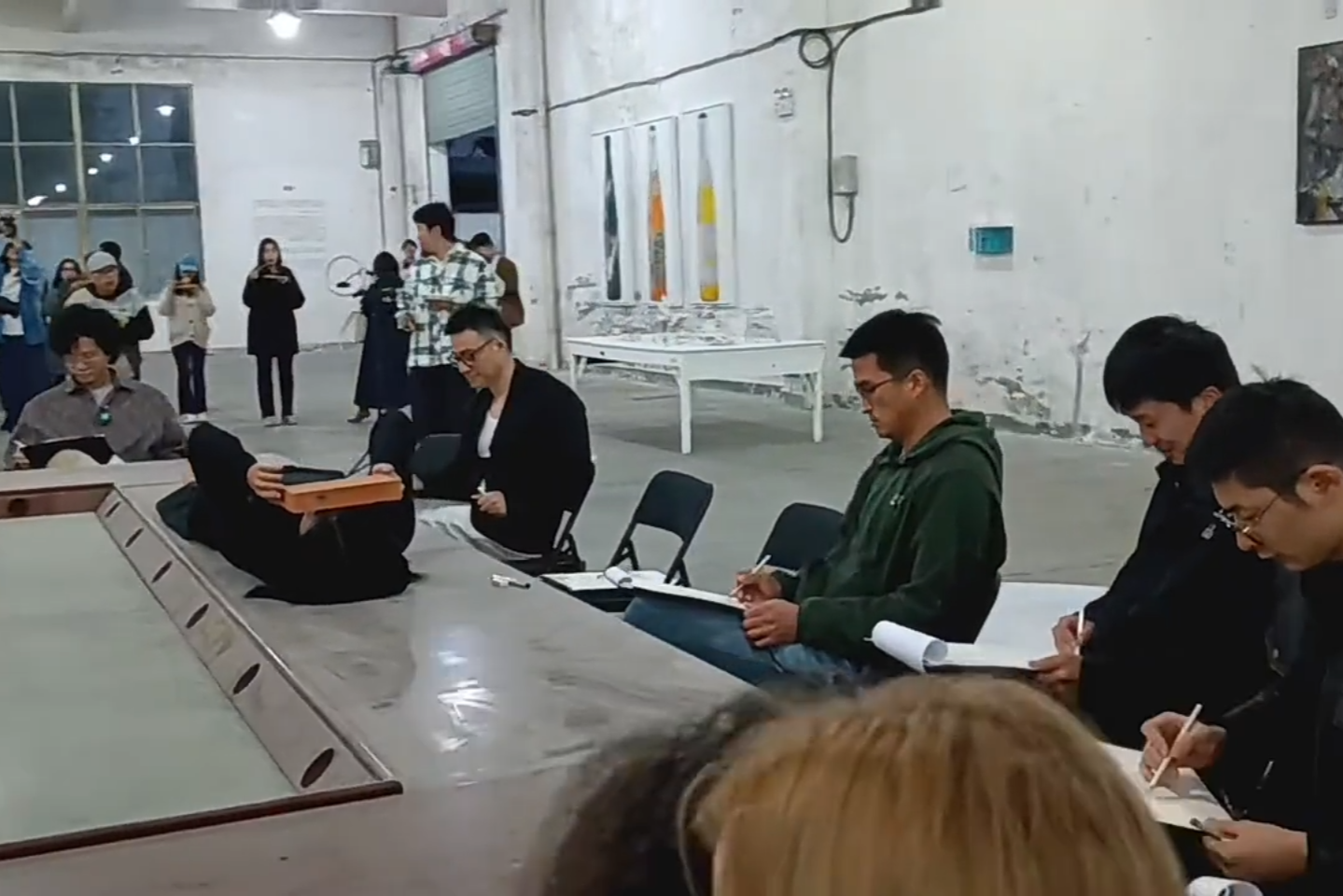
Live participatory performance with drawing, found factory table, brick, and audience participation. Commissioned for the opening of Shangang 100 Cultural and Creative District, premiering alongside the group exhibition why we meet: Reference Points in Relationships.
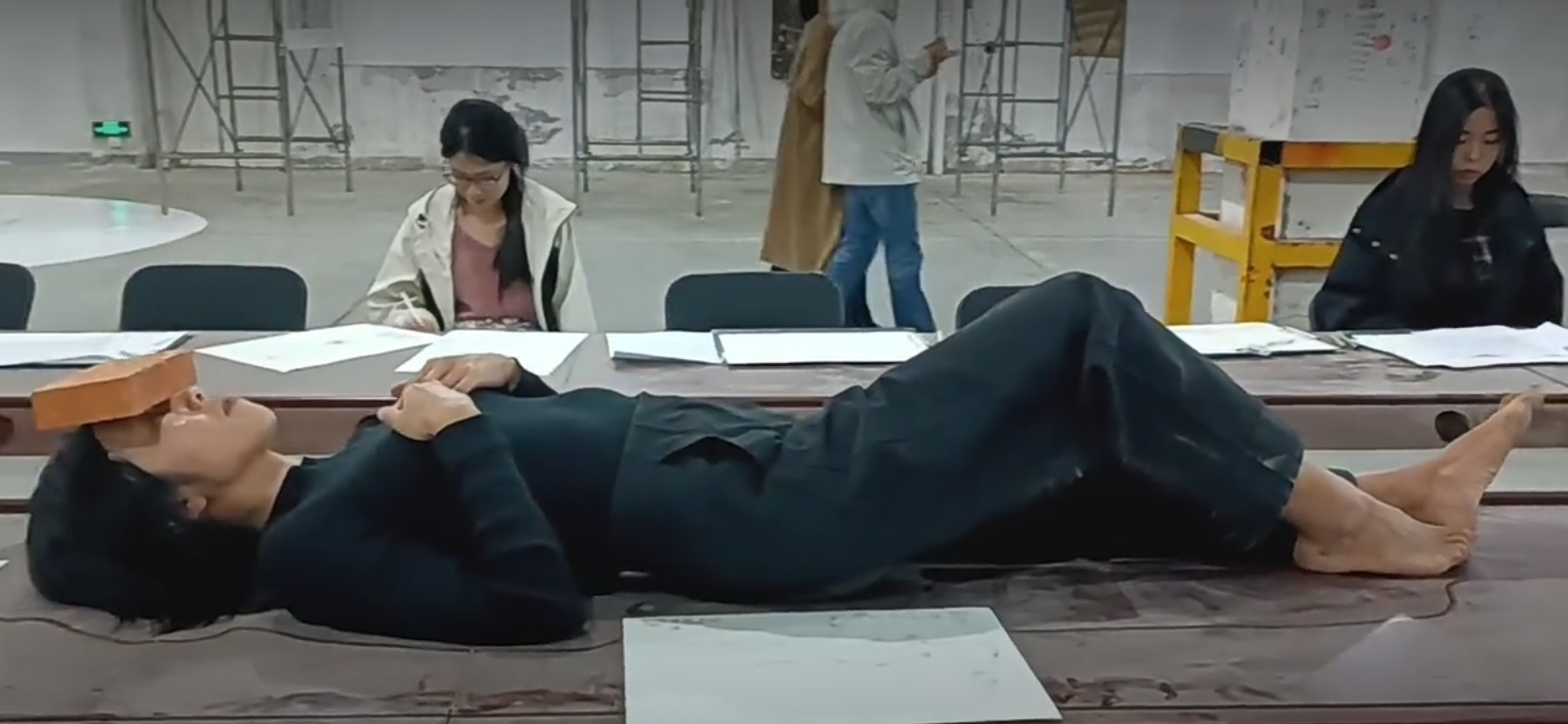
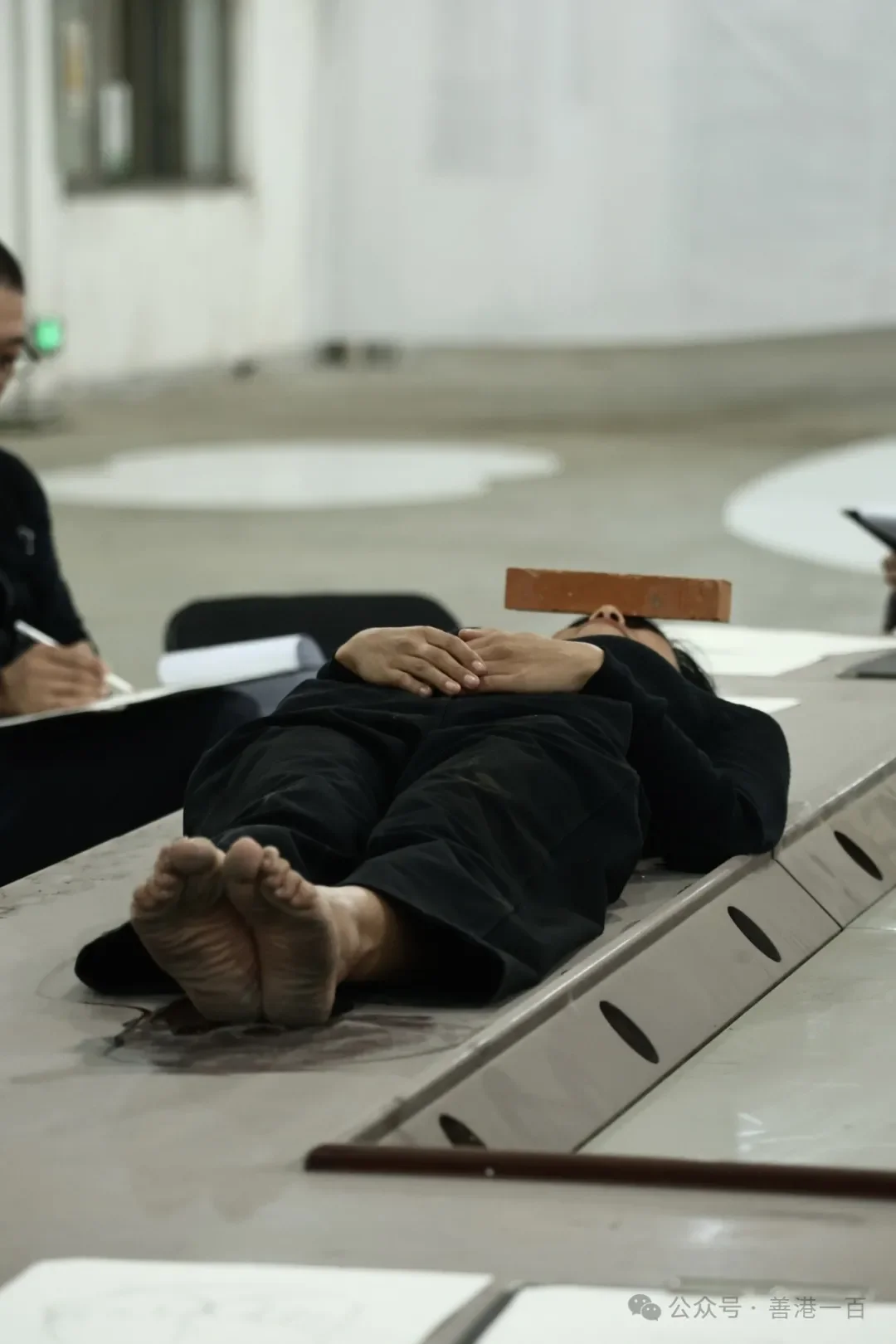
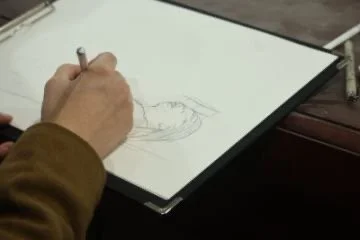
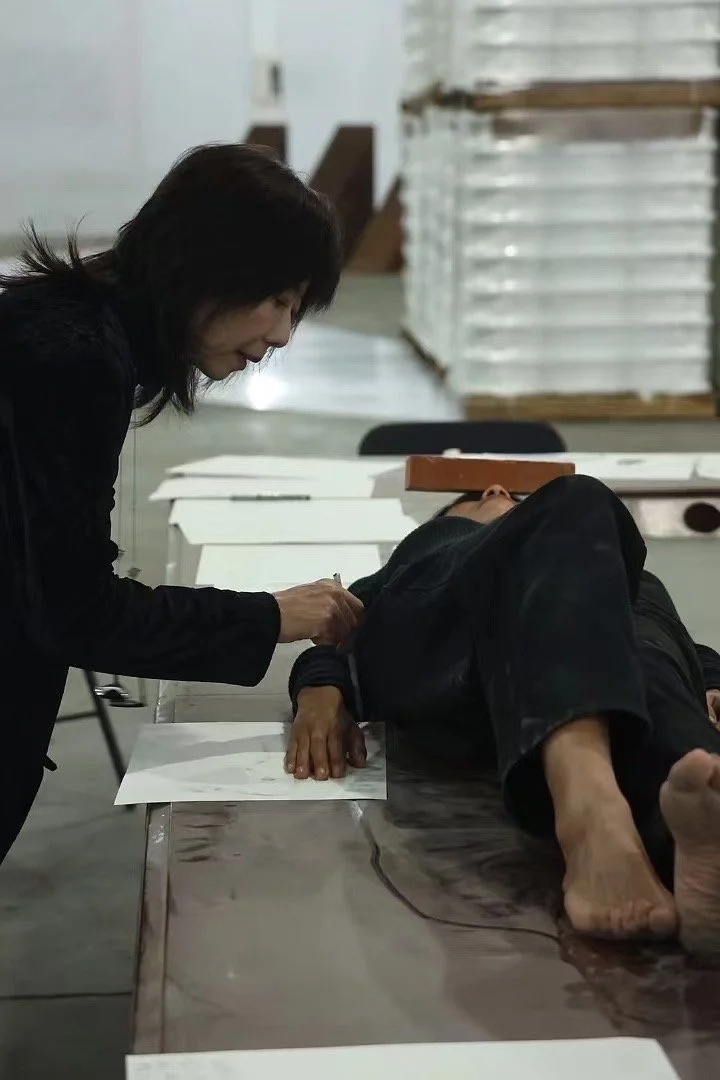
In Everybody, Rest, drawing is not documentation. It becomes a metaphor for rest and a gesture toward it. On an abandoned, dust-laden factory table—a relic of the site’s manufacturing heritage—a performer lies motionless, a single brick balanced precariously on her forehead. The gesture is borrowed from local construction workers, who, during brief lunchtime rests, use rubble as a kinetic alarm: if exhaustion pulls their bodies into deep sleep, the falling debris wakes them and returns them to the workday. Rest here is not simple relaxation. It is temporary, alert, and haunted by labour.
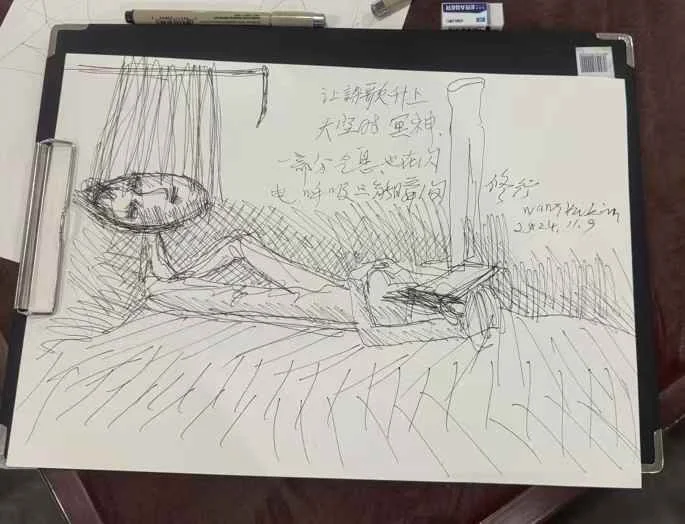
Drawing mirrors this fragile structure. It is an interval—a pause between looking and marking. It is a remainder, what stays after a transient moment. And it is a precarious balance: hand, eye, paper, and subject holding together without slipping. Like the brick, the drawing keeps the viewer from falling into passive, unconscious spectatorship. It is a small weight that keeps attention awake. Audiences are invited to become co-creators and ethnographers, translating the three-dimensional tension of the live act into two-dimensional personal interpretations from above, beside, or in between. To draw is to stop, look, and attend—an embodied gesture of care rather than passive consumption. It is a gesture toward rest, not rest itself. It cannot give the labourers true rest; it can only acknowledge, hold, and honour the fragility of their pause.
At Shangang 100, where industrial memory meets contemporary art, Everybody, Rest pays homage to the unseen workers who physically forged this landscape. In a society that demands relentless progress, true rest is nearly impossible. Drawing performs that paradox: it is both pause and task, both rest and labour. It suspends time, yet produces something. It gathers multiple vantage points—above, beside, between—making rest collective and relational rather than private.