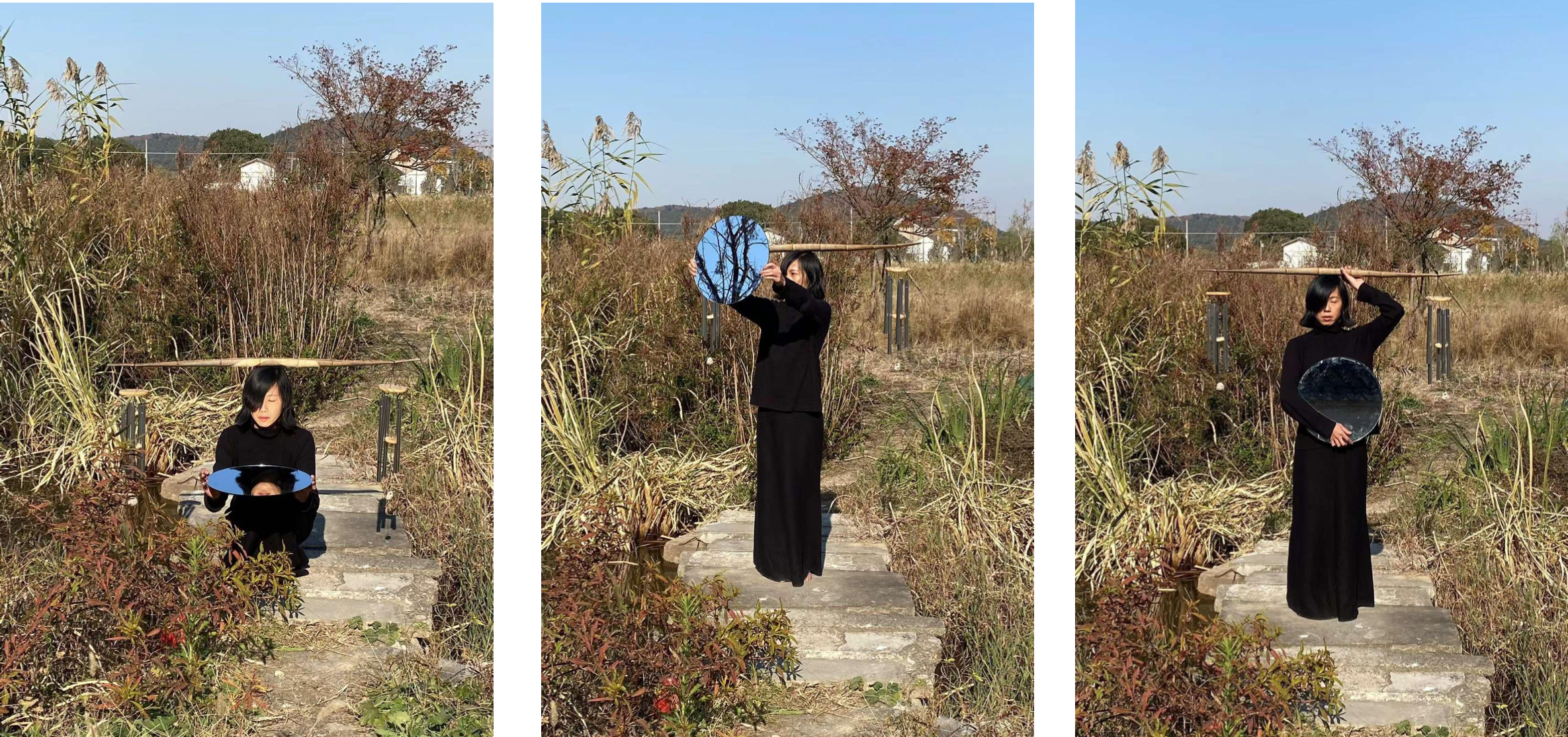
Natural Equilibrium
Bamboo Carrying Pole(biandan), Wind Chimes, Mirror
Manshan Island - Taihu Lake
Suzhou. China
2023
Natural Equilibrium is a 20-minute performance presented as part of Manshan Art – Taihu Lake Public Art, set on Manshan Island in Taihu Lake. Tt stages a living dialogue between body, landscape, and tradition. The performer, dressed in black, balances a traditional Chinese bamboo carrying pole (biandan) on their head, becoming a vessel for subtle movement and deep attention. Wind chimes suspended from the pole respond to the natural breeze, turning air currents into an ever-changing soundscape. When the performer raises a circular mirror toward the audience, the audience’s gaze is reflected back, dissolving the line between viewer and performer and inviting them into the work.
Nature is not a backdrop here but a collaborator, unpredictable, volatile, and alive. Air currents, temperature shifts, and changing weather become a dynamic canvas for expression. The performance’s elements :wind chimes, biandan, circular mirror, and the artist’s black-clad presence—are carefully chosen symbols of Chinese heritage and poetics, drawn from the artist’s observations and experiences within China. Yet the focus is not on the artist as an individual. Instead, the artist becomes a vessel through which audiences reconnect with their surroundings and one another. The mirror functions as a portal, making viewers part of the performance and blurring the boundary between observer and participant. Sound, often absent from the artist’s work, is central: the gentle clinking of the chimes makes the movement of air audible, complementing the visual and physical dimensions of the piece.
Natural Equilibrium asks how we carry our personal and collective load. The carrying pole symbolizes the weight of energy we bear, prompting questions about how we might balance and integrate our existence within the natural world and its inherent tensions. The work challenges conventional ways of carrying and interacting with objects, suggesting alternative ways to engage our surroundings—perhaps shifting the load from hands or shoulders to the head. It is a meditation on coexistence and harmony, where every gesture and object carries intention and affects the shared environment. Encouraging full presence, listening, and response, it offers a path to mindfulness through art. It invites reflection on our relationship with nature, heritage, and each other, and asks how we might carry our burdens differently, discover new balance, and live more harmoniously within the world, guided by nature’s wisdom.