Lotus Heart
Lotus Flower & Mud
Vientiane, Loas
2026
Part of ‘The 2nd International Laos Live Art Festival’
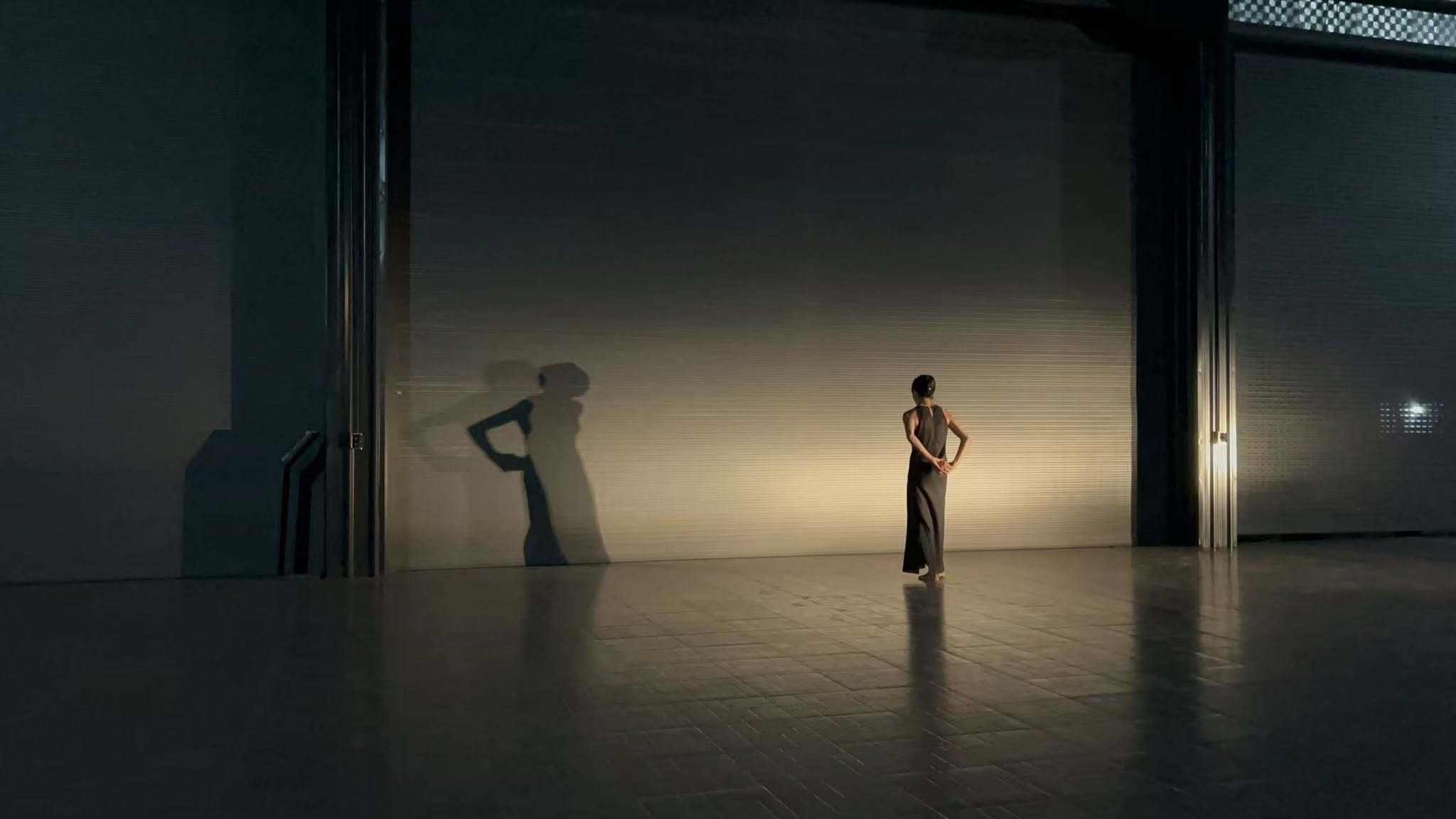
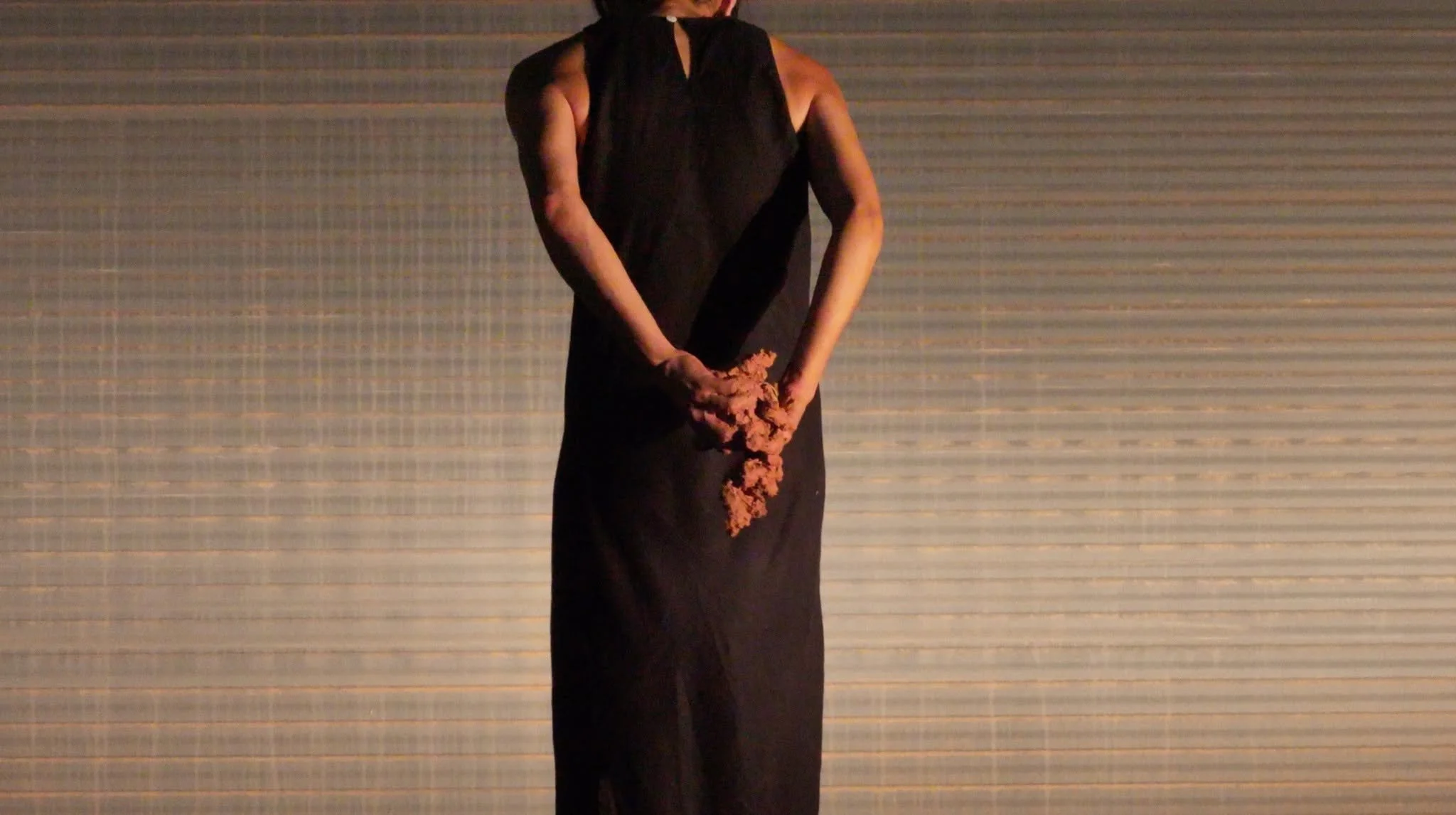
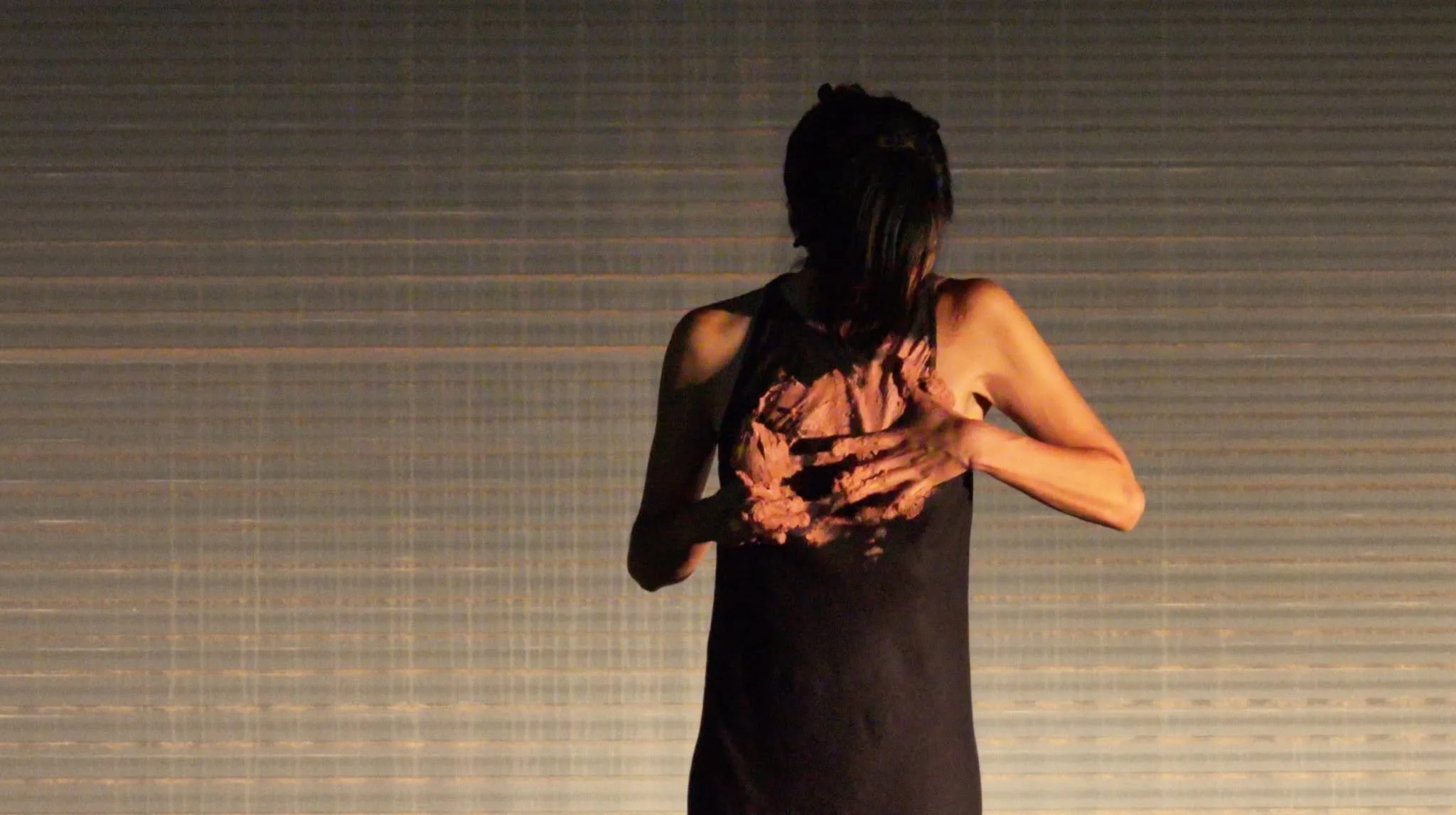
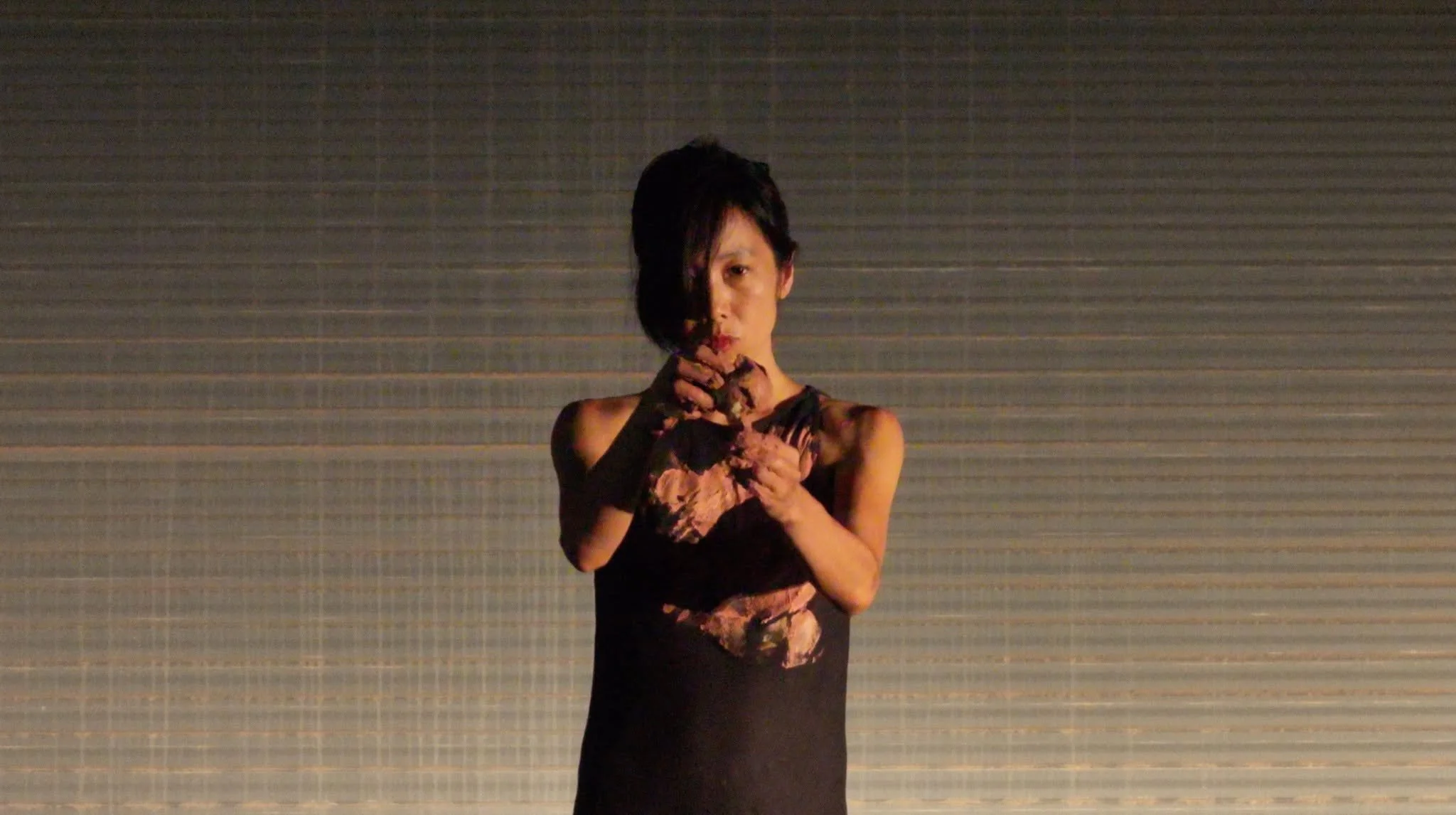
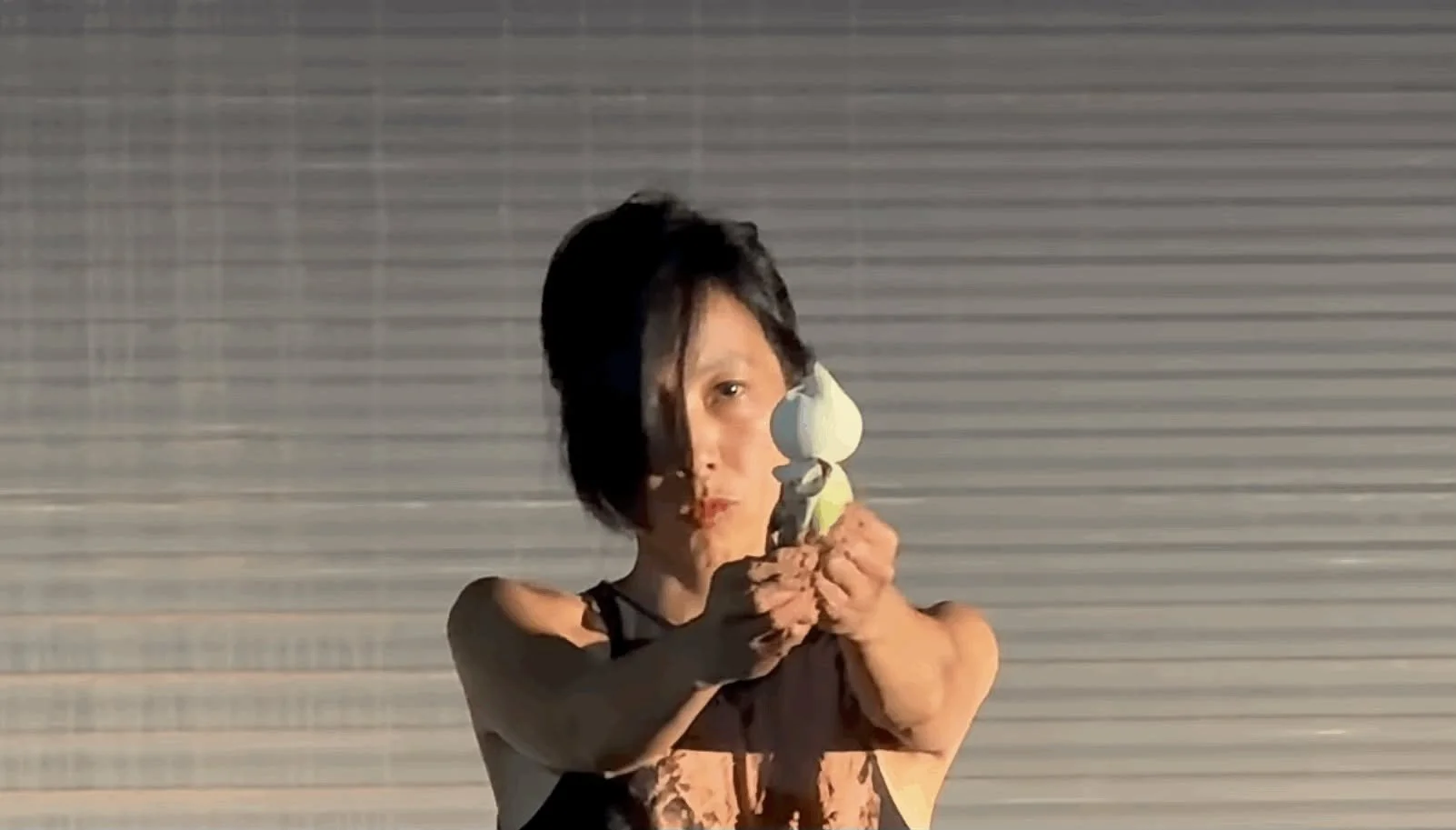
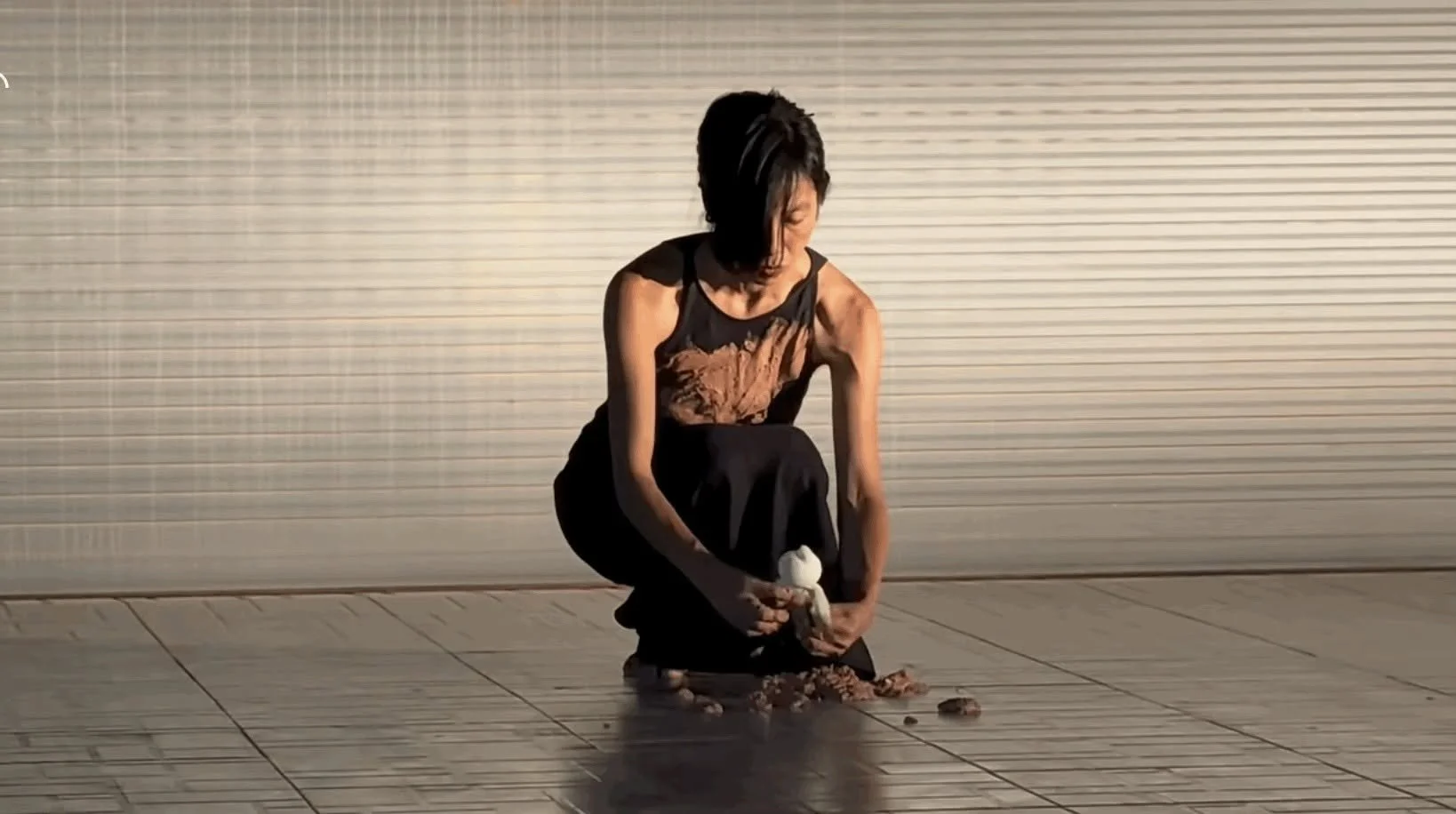
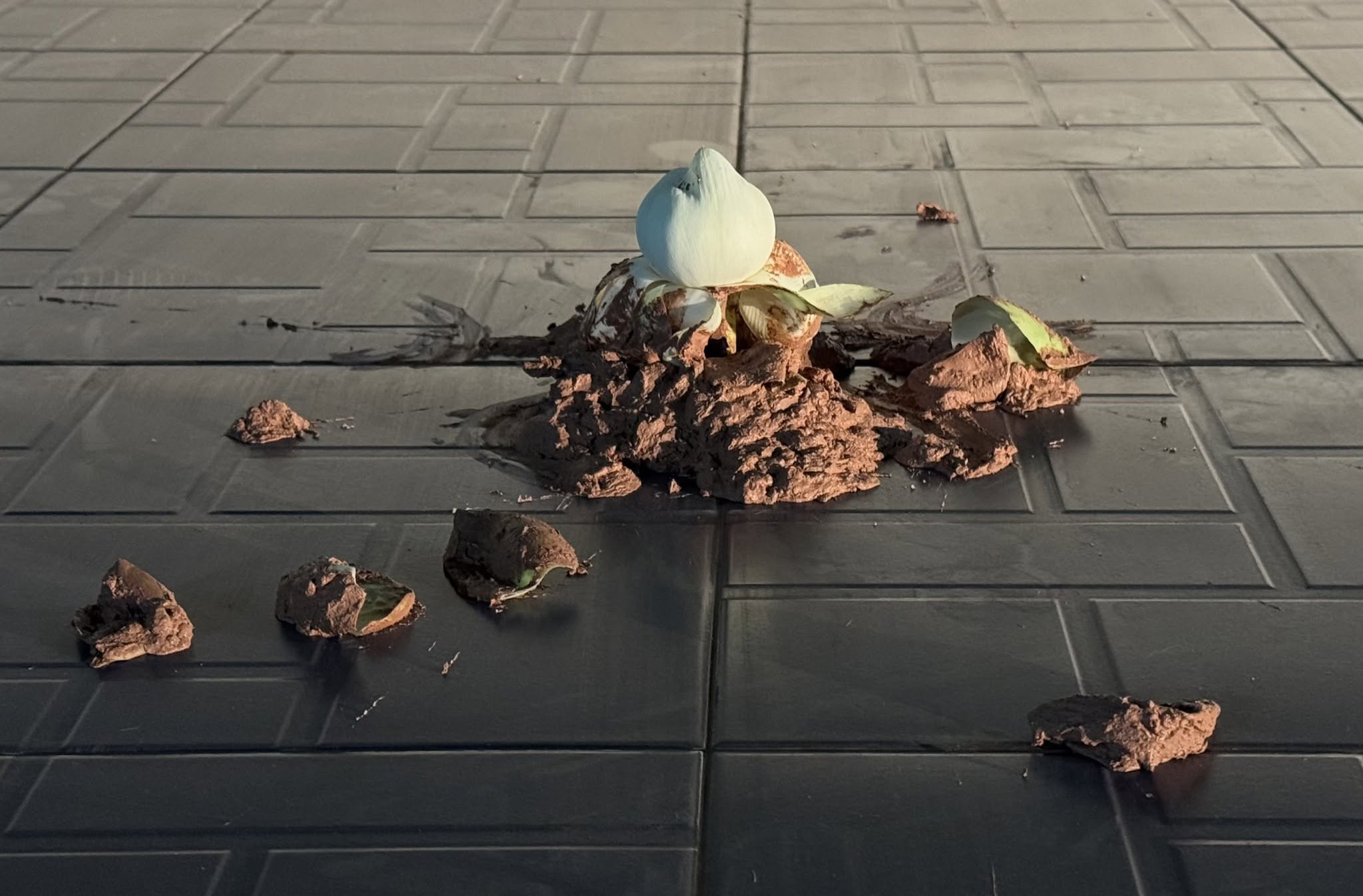
Lotus Heart closed the grand opening of the Second International Laos Live Art Festival this year. It is an offering to my Vietnamese heritage and a response to my first experience of Laos culture. I enter walking backward, facing the audience, hands behind my back. Between them is a ball of mud gathered from just outside the venue. I caress it slowly, then wipe my mud-covered hands across my chest, leaving an imprint over my heart on a black dress. Layer by layer, I peel away the red, sticky surface to reveal what is hidden inside: a white lotus.
The work is site-specific: the mud roots the ritual in that place, and the lotus becomes a bridge between Laos and Vietnam. In Lao tradition, the lotus is a sacred mirror of enlightenment—rising from murky water to bloom unstained, embodying purity, resilience, and spiritual awakening; its form echoes in the golden spire of That Luang, shaped like a lotus bud. In my Vietnamese heritage, the lotus is the national soul, captured in the saying “close to the mud but not tainted by its stench.” It represents grace, perseverance, and harmony between humanity and nature.
Lotus Heart holds these meanings as one shared offering. The mud is land, history, suffering, and ordinary reality. The lotus is purity, enlightenment, and the ability to rise without being corrupted by the mud it grows from. Wiping the mud over my heart suggests taking the land and its history into myself—making my body a meeting place for Laos and Vietnam. Peeling the mud away to reveal the white lotus suggests that purity and beauty are not separate from mud and struggle; they emerge from them. Walking backward, with my hands concealed, evokes memory, ancestry, and a hidden offering.
The audience watches a slow revelation: what is concealed becomes visible, and what is muddy becomes clear. Lotus Heart is a ritual of shared roots, resilience, and awakening—born from mud, history, and resilience, but blooming as one. It honours my Vietnamese heritage and my first experience of Laos culture.